A Small Autumn Tidy for Pots Before Winter
An autumn tidy for pots helps you decide what to trim, keep, move, or leave until spring, while keeping useful shelter and seasonal structure in place.
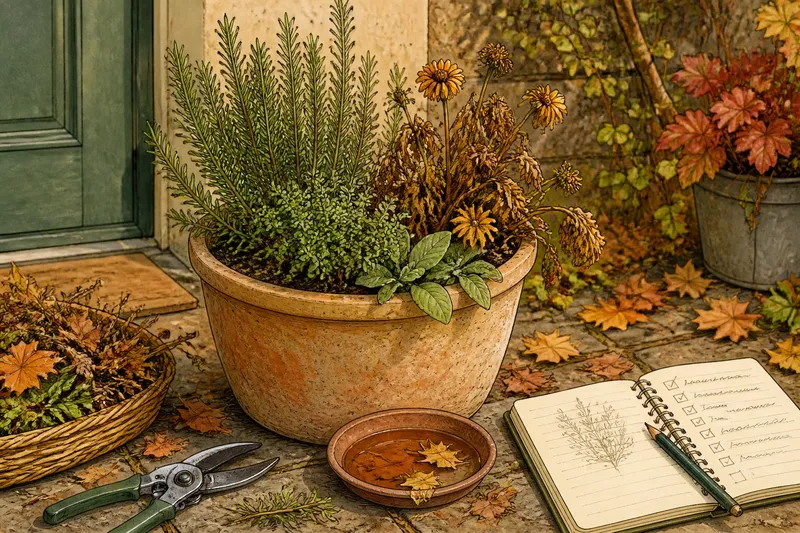
Which pots need attention before winter, and which are better left alone? An autumn tidy for pots is a review, not a demand to empty every container. Look at each one, remove growth that is clearly finished, and decide whether the plant and pot should stay outside, move to shelter, or wait for spring care.
Start by deciding what the pot is for now
In summer, containers may be judged by flowers, leafy growth, or the way they fill a corner. In autumn, ask a simpler question: does this pot still have a useful role through winter? A container can hold a healthy evergreen, shelter a dormant perennial, or provide a safe place for a plant that needs protection. It can also be an empty pot that is easier to clean and store.
Walk around your outdoor space with a notebook or phone and look at pots where they stand. Notice which plants are still green, which have finished flowering, and which containers are exposed to wind or catch rainwater. Make a quick decision for each: keep in place, move, trim, or review later.
This small pause prevents an easy mistake: treating every brown leaf as a signal to cut the whole plant back. Some stems and leaves are simply entering dormancy; others are dead, diseased, or collapsing. The plant’s condition, rather than the calendar alone, should guide your choice.
Remove what is clearly finished, not everything that looks untidy
Use clean hand pruners for firm stems and fingers for soft, loose material that comes away easily. Snip off spent annuals that have collapsed or turned mushy, and remove fallen leaves that are packed against crowns or sitting wet on the compost. Pick out weeds while their roots are still easy to see.
Leave sound stems and foliage on hardy perennials unless they are damaged or creating a problem. They can mark where a dormant plant is, and their structure may remain useful in the container through the colder months. If you are unsure whether a plant should be cut back, leave it for now and identify it before pruning. A plant label or a clear photograph can help you check its care needs.
Discard diseased or heavily rotted material rather than mixing it into a home compost pile if you do not know whether your composting setup can handle it. Put ordinary healthy trimmings in the appropriate compost or green-waste stream available to you. Clear debris from the soil surface without scraping away the plant’s roots.
Check the compost and the drainage opening
Look at the surface of the compost. Remove weeds and loose dead leaves, then check whether the soil has pulled away from the pot’s sides, become compacted, or is staying soggy. Do not dig around the roots just to make the surface look neat. A light top-up with fresh container compost can tidy a low surface, but a plant that is crowded, unstable, or struggling may need a more considered repotting decision in spring.
Make sure the drainage opening is not blocked by leaves or debris. A pot that cannot drain can hold excess water around roots, while a container already standing in a saucer may collect rain. Empty the saucer when it is holding water, and place the pot where water can escape freely. Think of a drainage hole like a sink’s outlet: keeping it clear matters more than polishing the surface around it.
Do not pull a plant out of its pot simply to inspect its roots. If the plant looks sound and the container is stable, leave the root ball undisturbed. Save repotting for a clear need, such as a cracked container or a plant that has outgrown its space, and choose a suitable time for that plant.
Choose what to keep, move, or leave until spring
Keep outdoor pots in place when the plants are suited to local winter conditions and the site is not unusually exposed. Move tender plants to a sheltered spot, such as a cool porch or an unheated greenhouse, if they need protection and you have a suitable place. Avoid shifting a plant into a warm indoor room without checking its needs; a sudden change in conditions can be harder on it than a sheltered outdoor position.
Leave dormant plants and sturdy woody stems alone when there is no clear reason to cut them. If a pot is too heavy to move safely, do not force it. You can reduce exposure by moving nearby movable containers, or ask someone for help rather than risking a strain or a dropped pot.
For empty containers, decide whether they will stay outside or be stored. Clean off loose compost and plant debris, then let the pot drain. Store it somewhere it will not obstruct a walkway or collect standing water. Where a container must remain outdoors, check that it is stable and that water can escape.
Use this autumn pot checklist
- Plant condition: Is the growth healthy, dormant, collapsed, or diseased? Keep healthy growth, identify uncertain plants, and remove only clearly finished or damaged material.
- Surface debris: Are wet leaves, weeds, or fallen petals covering the compost? Clear them without disturbing roots.
- Drainage: Is the outlet clear, and is a saucer holding water? Clear the opening and empty standing water.
- Exposure: Is the plant in a windy, waterlogged, or unusually exposed position? Move it only if a more suitable sheltered place is available.
- Container condition: Is the pot cracked, unstable, or difficult to handle? Leave it safely in place if moving it would be risky, and plan a replacement or assistance when practical.
- Spring decision: Does the plant look crowded or the compost exhausted? Note it for a spring review rather than disturbing it without a reason now.
Say you have a pot of hardy herbs beside a sheltered doorway, with one annual flower plant collapsed and leaves gathered around the drainage opening. You could remove the spent annual and loose debris, clear the outlet, and leave the herbs in place; the visible result would be a tidier surface and a pot still holding the plants that remain useful through winter.
What should you do with common autumn pot problems?
Should I cut back every perennial in a pot?
No. Check the plant’s needs before cutting, because some perennials are better left until spring. When you cannot identify it confidently, leave sound growth in place and revisit the decision after identifying the plant.
Can I leave a saucer under an outdoor pot?
Check it after rain and empty it if water is standing in it. A saucer can be useful in some settings, but persistent standing water may leave roots too wet.
Should I bring every container plant indoors?
No. Some plants tolerate outdoor conditions, while others need a sheltered or protected location. Check the plant’s label or reliable care guidance and choose a spot that suits its needs.
What if I cannot tell whether growth is dead?
Do not make a large cut based on appearance alone. Remove material that is clearly mushy or detached, then wait to see what remains or identify the plant before pruning further.
Leave a useful note for spring
Once the tidy is done, mark any pot that needs a decision later. A small tag can say “identify plant,” “check roots,” or “repot if still crowded,” giving you a practical reminder without turning autumn cleanup into a full renovation. Keep the note specific to what you saw, and the next inspection will begin with a clear question.
A small autumn tidy for pots works best when it leaves healthy plants undisturbed and removes only what is getting in the way. Before you finish, make sure every pot is stable, its drainage is open, and any plant needing protection has a suitable place to spend winter.