Terracotta or Plastic Pots: What Changes for the Gardener?
Terracotta or plastic pots change lifting, watering, and appearance. Compare their everyday trade-offs and choose containers that fit your space and routine.
Terracotta or plastic pots can change how often you water, how easily you move a container, and how it looks on a patio. If you are choosing for a small outdoor space, the best material is the one that fits both the plant’s needs and the way you use the space.
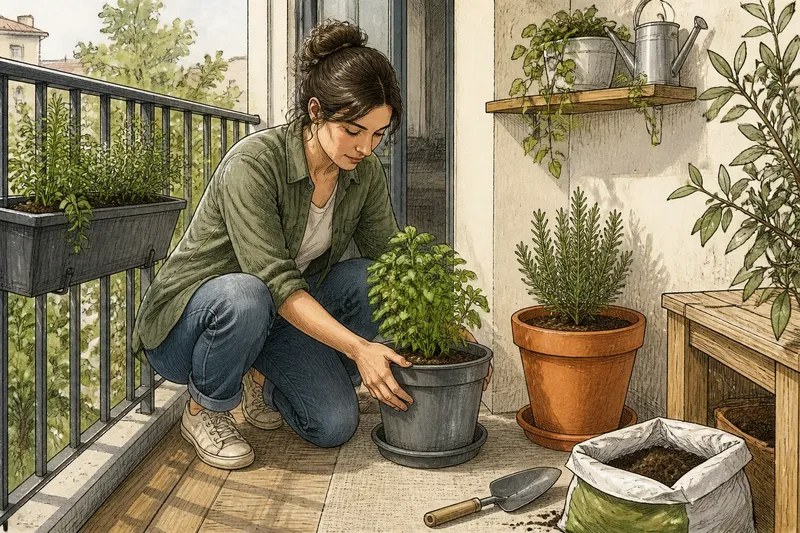
Imagine you have a narrow balcony, a bag of potting mix, and two similar herbs to plant. One pot is terracotta and the other is plastic. Rather than treating them as interchangeable shells, consider how each will behave through an ordinary week of watering, rearranging, and cleaning up.
Start with the balcony, not the pot color
In this invented situation, the balcony has a sunny railing, a sheltered corner, and a door that must stay clear. The gardener wants to keep one herb near the railing and move the other into shade during hot afternoons. Those details make weight and handling as relevant as appearance.
Terracotta is fired clay. Its porous walls allow moisture to move through the material, so the outside may feel damp after watering. Plastic does not absorb water in the same way. That difference influences how quickly the potting mix dries, though the plant, pot shape, weather, and drainage also matter.
Think of a terracotta pot as a cotton shirt and a plastic pot as a rain jacket: one lets more moisture pass through, while the other holds it back. The comparison is only about the container wall; neither material replaces sensible drainage or attention to the plant.
Compare the daily trade-offs
- Watering attention: Terracotta often dries more readily because moisture can escape through its walls. Check the potting mix before watering rather than assuming a fixed schedule. Plastic tends to retain moisture longer, so avoid watering just because the surface looks dry.
- Weight: Terracotta is usually heavier, particularly when filled and damp. That can help a pot feel steady in a breezy spot, but it makes lifting and repositioning harder. Plastic is easier to carry, including when you need to bring a plant indoors or shift it out of strong sun.
- Appearance: Terracotta offers a warm, matte surface that suits a simple, natural look. Plastic comes in many colors and finishes, and can blend into a railing planter or provide a lighter visual accent. Either can look tidy; the choice is about the effect you prefer.
- Handling and storage: Clay can chip or crack if knocked or handled roughly. Plastic is less prone to breakage from an everyday bump, although it can become scuffed or brittle over time. Empty pots are also easier to stack and store when they are light and uniform.
- Drainage setup: Whichever material you choose, look for drainage holes so excess water can leave the pot. A saucer can catch drips, but do not leave the container standing in water for long periods.
Pot size and shape still deserve attention. A small container can dry out quickly regardless of its material, and a deep, narrow pot may be awkward to lift even if it is plastic. Choose a container that leaves room for the plant and fits the place where you intend to keep it.
Choose the material that fits your routine
For the balcony gardener, the moveable herb presents a clear choice. If it will be carried between the railing and a shaded corner, a plastic pot makes that task easier. If the herb stays put and the gardener likes a heavier, earthy-looking container, terracotta may be a better fit.
Watering habits can settle the decision. Someone who checks plants regularly may be comfortable with terracotta’s tendency to dry more readily. A person who prefers fewer container checks might lean toward plastic, while still checking the mix and responding to the plant rather than relying on the pot alone.
There is no need to use one material throughout a small garden. The invented gardener could put the frequently moved herb in plastic and the stationary herb in terracotta. That arrangement is useful because each pot is chosen for a different job, not because one material is universally superior.
What should you ask before choosing a pot?
Which pot is easier to move?
Plastic is usually lighter, so it is a practical choice for containers you expect to lift or relocate. Terracotta’s extra weight can make a pot feel more settled, but consider how awkward it may be to carry once filled.
Does terracotta mean I will water every day?
Not necessarily; drying depends on the plant, the weather, the potting mix, and the container’s size as well as its material. Check the mix and water when the plant’s needs call for it, rather than following a calendar by default.
Can plastic pots work in a small outdoor space?
Yes. Their low weight and variety of shapes can help when you need to fit containers on a railing, shelf, or narrow patio. Check that the pot has drainage holes and that its shape suits the spot.
What should I check on the pot label?
Look for the intended use, drainage details, and any care directions from the manufacturer. Where a decision depends on the label, manufacturer instructions, or local rules, follow the relevant guidance.
Put the choice into practice
Before buying, make a quick list of the jobs each container needs to do:
- Check the location: Note whether the pot will stay in one place or move between sun and shade.
- Check the lift: Consider carrying the filled container, not just picking up the empty pot.
- Check your routine: Decide whether you are comfortable checking moisture more often, especially in warm or exposed places.
- Check drainage: Confirm that excess water has a way out and that a saucer will not keep the pot sitting in water.
- Check the look: Compare the surface and color with the railing, shelf, or other containers nearby.
- Check storage: Consider where empty pots will go when the growing season changes.
Returning to the hypothetical balcony, the gardener places the plastic pot beside the railing for the herb that gets moved, and keeps the terracotta pot in the sheltered corner for the herb that stays put. The observable result is a lighter container for regular lifting and a clay container that suits a more permanent display, with each plant’s moisture checked on its own terms.
When choosing terracotta or plastic pots, start with the task you will repeat: lifting, watering, or arranging. That small decision makes it easier to buy a container you can live with, rather than one that only looks right on the shelf.