The Victorian Fern Craze and the Glass Case
The Victorian fern craze helped bring ferns into glass cases. See how to choose a display that suits your plants, available space, and care routine.
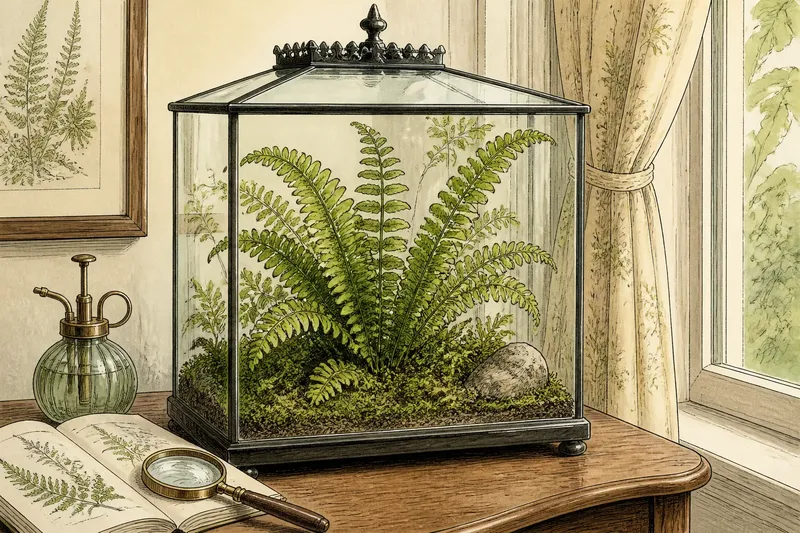
Wondering what the Victorian fern craze has to do with glass cases? The Victorian fern craze brought attention to fern displays and the enclosures used to present them indoors. For a display today, the useful question is what you want the case to show—and whether its plants can be cared for in that setting.
Choose a case for the display you want
A fern case is more than a glass container with greenery inside. Its enclosure, placement, and contents shape how it reads in a room. A compact case can invite close attention to leaves; a larger one can become a focal point.
Start with the purpose of the display rather than its period appearance. Decide whether you want living ferns, a planted glass arrangement, or an ornamental object inspired by historic cases. Each choice calls for a different approach to care and composition.
- Living fern display: Check the care label for the fern’s light and moisture needs. If you can provide them and reach the plant easily, use a case that allows routine access; otherwise, choose an open display or a decorative arrangement.
- Planted glass arrangement: Check the care needs of every plant and whether the enclosure allows you to observe and reach them. If their requirements and the case suit one another, arrange them with room to inspect each plant; if not, plant them in separate open containers.
- Decorative case: Check whether you want to avoid ongoing plant care. If so, use dried botanical material, stones, or objects; if you want living growth, select plants and a container suited to their care needs instead.
Say you have a narrow side table beside a bright, drafty window, and you want to display one fern. You check the fern’s label, then choose a small case that fits securely on the table and can be moved away from the draft when needed. The plant remains visible within a defined area, and the table still has open space; if the case blocks the table’s everyday use, a single open pot is the better tradeoff.
Notice how fern collecting shaped the display
Ferns offered collectors a variety of foliage forms without relying on showy flowers. Fronds can be finely divided, arching, upright, or compact, making leaf shape and growth habit natural subjects for close observation.
A glass enclosure gives a collection a visible boundary and a distinct place in a room. It can keep attention on the plants while allowing them to be viewed as part of the interior.
A display devoted to ferns asks the viewer to compare their fronds and growth habits. A mixed arrangement instead asks the eye to read a composition of foliage, open space, and selected objects. The same glass boundary can frame either approach; the contents determine whether the result feels like a collection or a small scene.
Match the contents to the case
What suits a display devoted to one kind of plant?
Use a restrained case that keeps attention on the fern’s form. Give each plant space to be seen, and leave out unrelated objects if they make the foliage harder to notice.
How do you arrange a miniature scene?
Choose a simple idea, such as a shaded woodland floor, and make the plants the main feature. If ornaments compete with the foliage, remove them until the leaves and open spaces are easy to distinguish.
What works in a small room?
Check whether a small case or clear vessel fits securely and leaves the surface usable. If it blocks an everyday task or is hidden behind other objects, use a single open pot or place the case elsewhere.
Can a case work as decor without living plants?
Yes. An empty case or a dry arrangement can provide a frame for stones, dried botanical material, or a small collection of objects without requiring plant care.
Use the case as part of the room’s design
The glass case makes a boundary visible. Like a picture frame, it tells the eye where to pause, but the display can be seen from several sides. Check the intended location from the doorway and from the seat where you spend time.
Consider the case’s materials alongside the room’s existing furnishings. A dark wood stand can make the display feel formal; a minimally framed case can sit more quietly among contemporary pieces. Decide whether you want the case to blend in or draw attention.
Reflections and a busy backdrop can make fine foliage difficult to see. If the leaves disappear against the surroundings, move the case or simplify what sits behind it. A clear view helps you enjoy the display and notice changes in the plants.
Make a living display easy to inspect
A glass case can affect air movement and moisture around its plants. Its suitability depends on the species and enclosure, so do not assume every fern needs the same conditions or that glass automatically creates an ideal environment. Follow the plant label and choose a case only if its conditions suit the plants.
Before planting, check that you can reach the foliage, remove fallen leaves, and observe growth. If the opening makes these tasks awkward, use a more accessible container. Easy access also helps you see whether a plant is pressing against the glass or crowding its neighbors.
Keep the arrangement open enough to inspect. If one plant blocks another or leaves touch the glass, adjust the layout or move a plant to a separate pot. The display should make the plants easier to see, not conceal their condition.
Check these details before choosing a display?
- Plant care label: Check the listed light and moisture needs. If the location and case can accommodate them, proceed with the living display; otherwise, choose an open pot or decorative arrangement.
- Case access: Check whether you can reach the leaves and remove fallen material. If you can, the case is practical for routine attention; if not, select a container with a wider opening.
- Room placement: Check whether the case fits securely without blocking the surface’s usual purpose. If it does, keep the display there; if not, move it or use a smaller open vessel.
- View through the glass: Check for reflections and visual clutter behind the case. If the foliage remains clear, keep the location; if it disappears, simplify the backdrop or move the case.
- Plant spacing: Check whether each plant is visible and leaves have room away from the glass. If so, keep the arrangement; if one plant crowds another, reposition it or use a separate pot.
- Display purpose: Check whether you want living growth or a decorative object. If you want to tend plants, choose a suitable living arrangement; if not, use dry materials or an empty case.
Use historic character without copying every detail
To evoke a Victorian fern display, focus on close observation: varied fronds, a defined enclosure, and a deliberate place in the room. An elaborate reproduction is not necessary. A simple glass case can suggest the same approach when its contents are arranged with care.
Let foliage provide the main texture, keep decorative objects secondary, and choose a surface that gives the case a clear place. For a quieter contemporary look, reduce ornament and let the contrast between leaves and glass carry the design.
Follow the plant label and the case maker’s care instructions. For a home display, choose cultivated plants rather than taking plants from the wild; consult local guidance if you are unsure about collecting or moving plant material.
Let the contents determine the form
The glass case gives a plant display a visible boundary and makes its contents part of the room. A focused fern arrangement invites attention to frond shape; a mixed planting creates a composed scene; an empty case can serve as decor without living plants.
For your room, decide what the case will show, how you will reach its contents, and whether the placement leaves the space usable. A display works best when its form, contents, and care routine fit together.